Call Us
(813) 440-8108

Updated July 2026 · Reviewed by the United HVAC Motors technical team
The short answer
ECM and variable-speed are not two competing motor types. A variable-speed blower motor is an ECM. "ECM" describes the motor technology (electronically commutated, brushless DC). "Variable-speed" describes how that motor is controlled.
The comparison you actually want is between the three motor tiers found in real systems:
If you have been told your system needs "an ECM" or "a variable-speed motor" and you are trying to work out which one you are being sold, this article settles it. The terms overlap, contractors use them loosely, and the distinction that actually affects your bill is not the one the names suggest.
An ECM (electronically commutated motor) is a brushless DC motor with an onboard electronic control module. Instead of mechanical brushes switching current, the electronics do it. That is a statement about how the motor is built.
Variable-speed means the motor can run at any speed across a continuous range rather than at fixed steps. That is a statement about how the motor is controlled.
Every variable-speed residential blower motor on the market is an ECM. But not every ECM is variable-speed, and that is the gap where the confusion lives. Constant-torque ECMs (commonly the Genteq X13 family) are fully electronically commutated but run on preset speed taps chosen at installation, not on continuous modulation.
So the honest answer to "ECM or variable-speed?" is: it is an ECM either way. The real question is which kind.
| PSC | Constant-Torque ECM (X13) | Variable-Speed ECM | |
|---|---|---|---|
| Motor technology | AC induction, brushed design era | Brushless DC (ECM) | Brushless DC (ECM) |
| Speed control | Single or two fixed speeds | Preset taps, holds torque constant | Continuous modulation, holds airflow constant |
| Typical efficiency | 60 to 70% | Around 80% | Up to about 90% |
| Humidity control | Poor | Moderate | Excellent (low-speed dehumidification) |
| Noise | Hard starts and stops | Quieter, soft ramp | Quietest, gradual ramp up and down |
| Replacement part cost | $150 to $450 | $400 to $800 | $600 to $1,200+ (OEM) |
| Needs programming? | No | Tap selection at install | Yes, model-specific |
Part cost ranges reflect typical U.S. pricing as of mid-2026.
The critical row is the last one. A variable-speed ECM must be programmed to your specific system's airflow profile. Install an unprogrammed or generically-flashed unit and it will either refuse to run or run at the wrong CFM, which quietly destroys the efficiency you paid for.

This is the comparison worth understanding, because it is the one that changes both your comfort and your invoice.
A constant-torque ECM holds torque steady. As your filter loads up and static pressure rises, the motor keeps pushing with the same force, which means airflow drops. It is efficient and quiet, but it does not compensate for a dirty system.
A variable-speed ECM holds airflow steady. As static pressure rises, it draws more power and spins faster to deliver the same CFM. That is what enables true dehumidification, constant-fan comfort, and the efficiency numbers on the brochure. It is also why a variable-speed motor in a badly ducted house will burn through electricity fighting resistance that should never have been there.
Which means variable-speed is only worth the premium if your ductwork is sound. On a leaky, undersized duct system, you are paying for a motor whose entire advantage is being spent compensating for a problem you could have fixed for less.
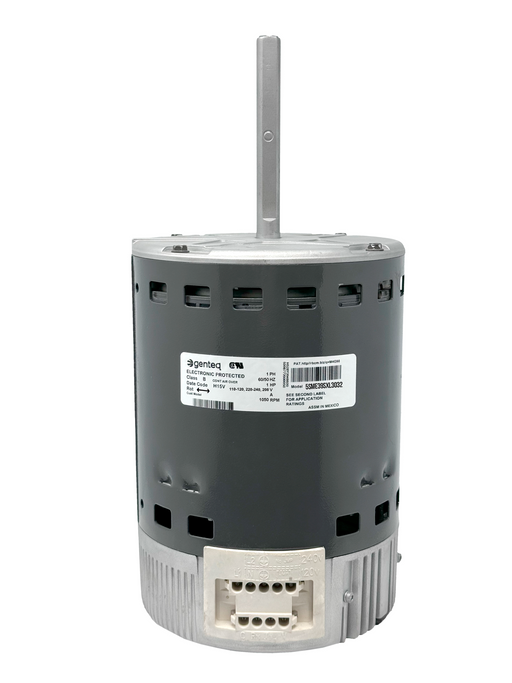
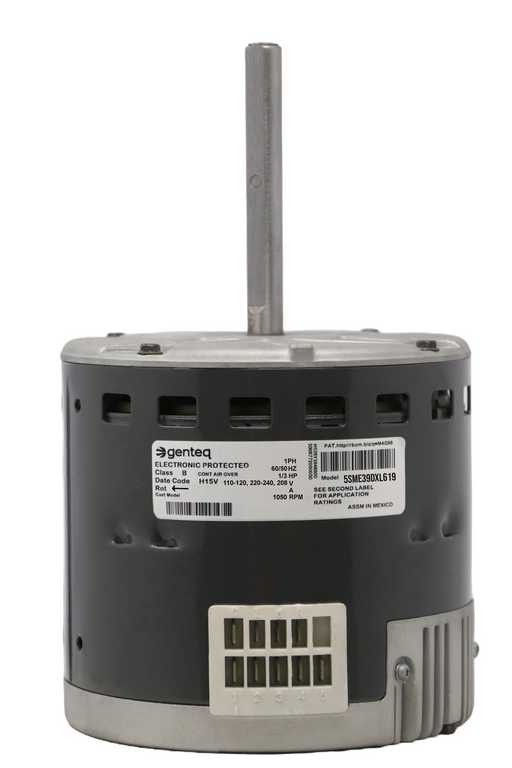
Check the motor label. A PSC motor lists a horsepower rating and a capacitor requirement. An ECM lists a voltage input and typically an amperage draw, with no run capacitor. X13 motors are usually labeled as such and have a small terminal block with numbered taps. Variable-speed motors have a larger control module attached and communicate with the system board.
If you cannot tell, our guide to the different types of blower motors covers identification in detail, and testing the motor with a multimeter will confirm whether it is actually the failure point.
The tier you have determines the size of the bill. A PSC replacement is a few hundred dollars. A variable-speed ECM from an OEM distributor can run four times that, with lead times that stretch to weeks during peak season.
This is where remanufactured units change the math. A remanufactured Genteq ECM or X13 motor is rebuilt to OEM specification and ships pre-programmed for your model, so it installs plug-and-play at a materially lower cost with no backorder wait. The labor is identical either way. For the full numbers, see our blower motor replacement cost breakdown.
Remanufactured Motor by United HVAC Motors 2 Year Replacement Warranty (Terms Apply) Plug n Play - 100% Programmed Match your Motor Model N...
View full detailsTo confirm product availability please call (813)440-8108. Some items might be in stock but not yet prepared to be shipped.

 Sold out
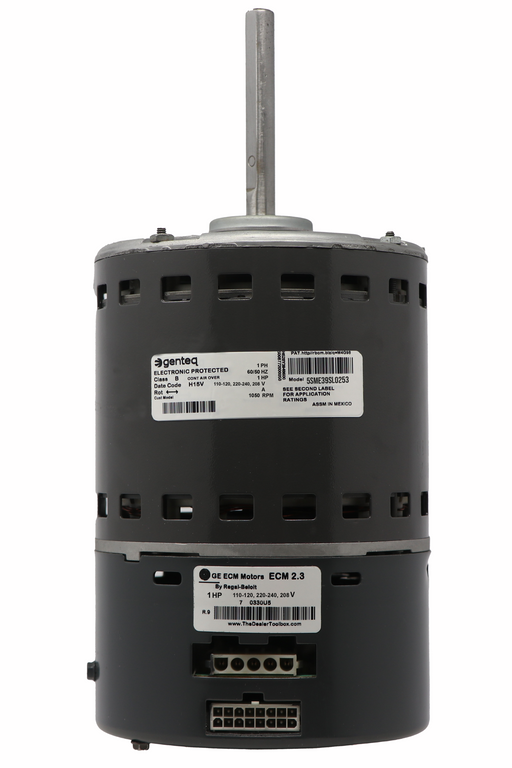
5SME39SL0253 GE Genteq Blower Motor ECM 2.3 1 HP
Sold out
5SME39SL0253 GE Genteq Blower Motor ECM 2.3 1 HP
Remanufactured Motor by United HVAC Motors 2 Year Replacement Warranty (Terms Apply) Plug n Play - 100% Programmed Match your Motor Model N...
View full detailsECMs are lower-maintenance than PSC motors (no brushes, sealed bearings on most units), but they are not maintenance-free. The single biggest thing you can do to extend the life of any ECM is keep static pressure low: change filters on schedule, keep return vents unblocked, and have ductwork checked. An ECM working against high static pressure draws more current, runs hotter, and cooks its own control module. That module is the part that usually fails first, not the motor windings.
A variable-speed blower motor is a type of ECM. All variable-speed residential blower motors are electronically commutated, but not all ECMs are variable-speed. Constant-torque ECMs (X13) are also ECMs but run on preset speed taps.
A constant-torque ECM maintains steady torque, so airflow drops as static pressure rises. A variable-speed ECM maintains steady airflow, ramping up power to compensate for rising static pressure. Variable-speed offers better humidity control and efficiency, at a higher cost.
Only if the ductwork is properly sized and sealed. Its advantage is delivering constant airflow, and on a poorly ducted system that advantage is consumed fighting resistance, eliminating the efficiency benefit you paid for.
Sometimes, but it is not a straight swap. It requires a compatible mounting, correct airflow programming, and in many cases control board changes. Consult a technician before assuming an upgrade is viable.
Check the motor label. PSC motors specify horsepower and require a run capacitor. ECMs list voltage input with no run capacitor, and variable-speed units have an attached control module that communicates with the system board.
Identify the tier you have before you accept a quote. If it is an ECM, compare the OEM price against a programmed remanufactured unit with a 2-year warranty. USA-based technical support in English and Spanish.
To confirm product availability please call (813)440-8108. Some items might be in stock but not yet prepared to be shipped.
 Sold out
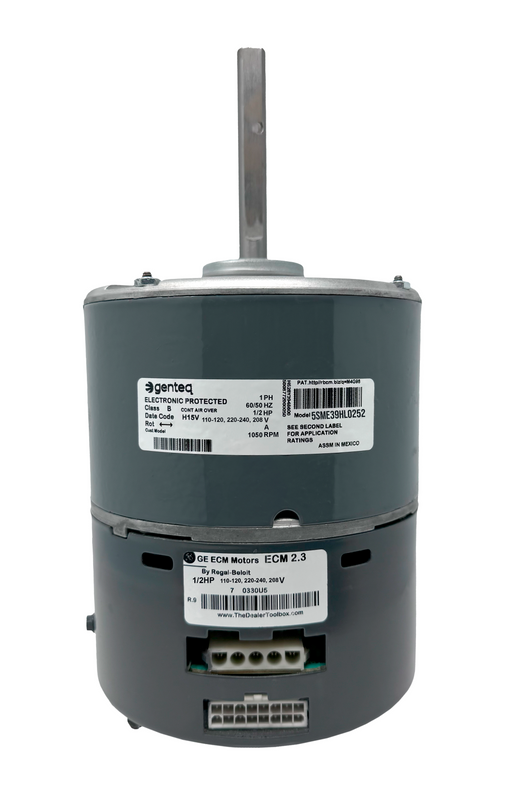
5SME39HL0252 GE Genteq Blower Motor ECM 2.3 1/2 HP
Sold out
5SME39HL0252 GE Genteq Blower Motor ECM 2.3 1/2 HP
Remanufactured Motor by United HVAC Motors 2 Year Replacement Warranty (Terms Apply) Plug n Play - 100% Programmed Match your Motor Model N...
View full detailsRemanufactured Motor by United HVAC Motors 2 Year Replacement Warranty (Terms Apply) Plug n Play - 100% Programmed Match your Motor Model N...
View full details