

Updated July 2026 · Reviewed by the United HVAC Motors technical team
Identify it by the sound
- Squealing → blower motor bearings starting to fail. Months of warning.
- Grinding → bearings gone. Weeks at best.
- Humming, no air → usually the run capacitor. Inexpensive fix, not a dead motor.
- Rattling or vibration → loose set screw or an unbalanced blower wheel.
- Whistling → airflow restriction. Not a mechanical fault — a pressure problem.
- Booming on startup → duct expansion, or delayed gas ignition. The second one needs attention now.
- Hissing or bubbling → possible refrigerant leak. Professional only.
Stop the system now if you hear grinding, smell burning, or hear a loud bang before the furnace ignites. The first two mean mechanical or electrical failure in progress; the third can indicate delayed ignition, which is a combustion safety issue for a qualified technician.
A forced-air system makes a low, even sound. Anything with character to it — a pitch, a rhythm, a scrape — is information. Below, the noises worth acting on, sorted by what makes them.
Squealing: Bearings, and You Have Time
A high, steady squeal that appears when the blower starts and often eases as the system warms up. This is the sound of blower motor bearings drying out and beginning to fail.
It is a genuine warning, and it is worth acting on while it is still just a noise. Squealing typically precedes actual failure by months. Grinding does not.
Do not try to lubricate it. Most modern motors are permanently sealed with no oil ports. If you cannot see a dedicated port, there is nothing to lubricate, and spraying penetrating oil at the bearings can wash out what factory grease remains. ECM motors are never oiled.
Confirm with the hand-spin test — power off at the breaker, spin the blower wheel by hand. Stiff or gritty means the bearings are done. See how to test an HVAC blower motor.
Grinding: Stop the System
Metal on metal. The bearings have failed and the rotor is contacting something it should not. Continuing to run it can seize the motor entirely and, in the worst case, damage the blower housing.
Shut it off at the breaker and plan on replacement. This is not a repairable condition.
Are you an HVAC company?
Save big with our B2B program: trade pricing on 30,000+ remanufactured Genteq motors, same-day processing and a 2-year warranty.
Humming Without Airflow: Usually the Cheapest Fix on This Page
The motor is receiving power and trying to turn but producing no torque. On a PSC motor this is the classic signature of a failed run capacitor — a $15 to $60 part.
This matters because a humming motor gets misdiagnosed as a dead motor constantly, and healthy motors get replaced as a result. Test the capacitor before authorizing anything expensive: testing a blower motor with a multimeter.
Safety: a run capacitor holds a lethal charge even with the system off at the breaker. Discharge it before touching any wiring.
If the motor has no capacitor and a module bolted to its end, it is an ECM, and this diagnosis does not apply — see types of blower motors.

Rattling and Vibration: Look at the Wheel, Not the Motor
A rhythmic rattle that tracks with blower speed usually means the blower wheel, not the motor.
- Loose set screw — the wheel is slipping on the shaft. A five-minute fix that regularly gets misdiagnosed as a failing motor.
- Unbalanced wheel — caked with dust on one side, or fins bent during a previous repair. An unbalanced wheel destroys bearings, so this becomes a motor problem if left alone.
- Debris in the housing — it happens more often than you would think.
Cleaning the wheel resolves most of these: how to clean an HVAC blower motor.
Whistling: Not a Broken Part
Whistling at grilles, around the filter slot, or from the return is air being forced through an opening too small for it. Nothing is broken — the system is telling you it is working against too much resistance.
Common causes: a clogged filter, a filter too dense for the system, closed registers, or an undersized return duct.
This one is worth taking seriously even though nothing is failing yet, because the same restriction that makes the whistle is quietly shortening the life of your blower motor. A PSC runs hotter; an ECM draws more current and cooks its control module. See what ideal static pressure is and why it kills blower motors.

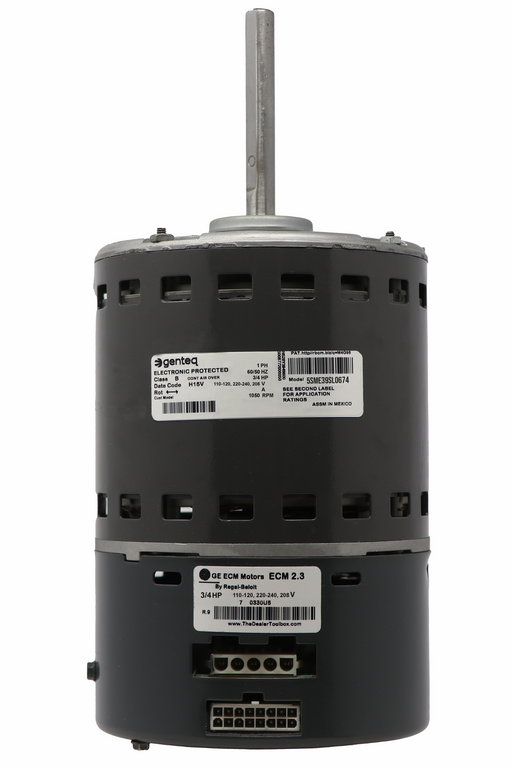
Motor de soplador Genteq 5SME39SL0674 ECM 2.3 3/4 HP
Motor remanufacturado por United HVAC Motors Garantía de reemplazo de 2 años (se aplican términos) Plug n Play - 100% programado...
Ver todos los detalles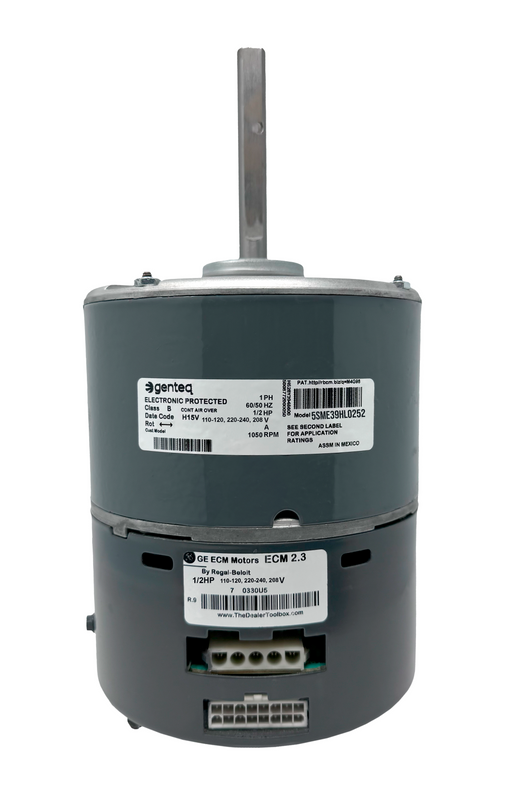
Motor de soplador Genteq 5SME39HL0252 ECM 2,3 1/2 HP
Motor remanufacturado por United HVAC Motors Garantía de reemplazo de 2 años (se aplican términos) Plug n Play - 100% programado...
Ver todos los detallesBooming or Banging on Startup
Two very different causes, and they need distinguishing.
- Sheet metal ducts flexing as pressure changes. Annoying, harmless, and often improved by reducing static pressure.
- Delayed gas ignition — a boom from the furnace itself just before it fires, caused by gas accumulating before ignition. This is a combustion safety issue. Have it inspected rather than lived with.
Clicking, Buzzing and Electrical Noises
- A click at start and stop — normal relay operation.
- Continuous clicking — a relay or control problem.
- Electrical buzzing — loose wiring or a contactor. Worth checking promptly.
- Clanking from the outdoor unit — possible compressor issue. That is a different component and a different conversation.
Hissing or Bubbling
Possible refrigerant leak, particularly if cooling performance has dropped. Refrigerant is not a DIY subject — handling it is regulated and requires certification. Call a technician.
Sound to Cause, at a Glance
| Sound | Likely Cause | Urgency |
|---|---|---|
| Squealing | Blower bearings failing | Plan replacement |
| Grinding | Bearings failed | Shut it down |
| Humming, no air | Run capacitor | Cheap fix — test first |
| Rattling | Set screw or unbalanced wheel | Soon — it damages bearings |
| Whistling | Airflow restriction | Shortens motor life |
| Boom before ignition | Delayed gas ignition | Safety — call a pro |
| Hissing | Possible refrigerant leak | Professional only |
FAQs
Why is my HVAC suddenly so loud?
Match the sound to the cause: squealing and grinding point to blower motor bearings, humming without airflow points to the run capacitor, rattling to a loose or unbalanced blower wheel, and whistling to an airflow restriction rather than a broken part.
Is a squealing blower motor dangerous?
Not immediately, but it is a real warning. Squealing means bearings are beginning to fail and usually precedes actual failure by months. Grinding means they have failed and the system should be shut off.
Why does my blower hum but not blow air?
On a PSC motor this is the classic signature of a failed run capacitor. The motor has power but no starting torque. It is an inexpensive part, and this symptom is the most common reason healthy motors get replaced unnecessarily.
Can a loud HVAC system damage the motor?
The noise itself does not, but its causes can. An unbalanced blower wheel destroys bearings, and the airflow restriction behind a whistle makes the motor run hotter and fail earlier.
Should I oil a squealing blower motor?
Only if it has visible oil ports, which most modern motors do not. Sealed motors have nothing to lubricate, and ECM motors are never oiled.
What noise means I should shut the system off immediately?
Grinding, a burning smell, or a loud boom just before the furnace ignites. The first two indicate failure in progress; the third can indicate delayed ignition, which is a combustion safety concern.
Next Steps
If the noise traces to the blower motor, confirm the diagnosis before spending — a large share of "dead motors" are a failed capacitor. If it is genuinely failing, compare an OEM quote against a programmed remanufactured motor with a 2-year warranty. USA-based technical support in English and Spanish.
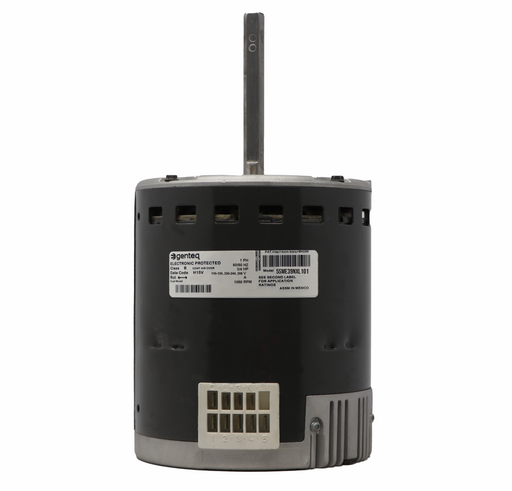
5SME39NXL101 Motor de soplador Genteq ECM X13 3/4 HP
Motor remanufacturado por United HVAC Motors Garantía de reemplazo de 2 años (se aplican términos) Plug n Play - 100% programado...
Ver todos los detalles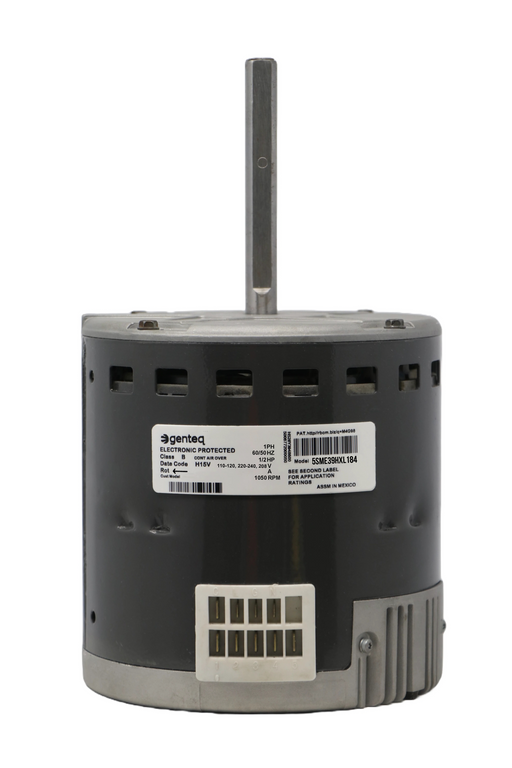
5SME39HXL184 Motor de soplador Genteq ECM X13 1/2 HP
Motor remanufacturado por United HVAC Motors Garantía de reemplazo de 2 años (se aplican términos) Plug n Play - 100% programado...
Ver todos los detalles