

Updated July 2026 · Reviewed by the United HVAC Motors technical team
Is a variable-speed blower motor worth it?
It depends almost entirely on your ductwork — not on the motor.
- Worth it if: your ducts are correctly sized and sealed, you run the fan continuously, you live somewhere humid, or you care about noise.
- Not worth it if: your ducts are undersized, leaky, or restricted. The motor's entire advantage gets spent fighting resistance you should have fixed instead.
- The premium: $600 to $1,200+ for the part versus $150 to $450 for a PSC. Payback comes from runtime, so the more hours it runs, the faster it pays.
- The catch nobody mentions: in a high-static-pressure system, a variable-speed ECM works harder, runs hotter, and destroys its own control module early.
Variable-speed blower motors are the top tier of residential airflow, and every brochure will tell you they save energy and improve comfort. Both claims are true, conditionally. This guide covers the conditions, because that is where people lose money.
What You Are Actually Buying
A variable-speed blower motor is a type of ECM (electronically commutated motor) that modulates continuously across its range rather than switching between fixed speeds. The defining behavior is this: it holds airflow constant. As resistance in the system rises, it ramps up power to keep delivering the same CFM.
That single property produces everything else on the feature list. Continuous low-speed operation means fewer hard starts, so it is quieter and it dehumidifies properly. Constant circulation means air passes through the filter more often, so air quality improves. And running long and slow rather than short and hard is what generates the efficiency numbers.
If the terminology is confusing you, our explainer on ECM vs. variable-speed blower motors clears it up: all variable-speed blower motors are ECMs, but not all ECMs are variable-speed.
The Ductwork Problem
Here is the part the brochure leaves out, and it is the whole decision.
A variable-speed ECM maintains airflow by working harder against resistance. In a well-designed duct system, resistance is low, the motor loafs along at partial power, and you get the efficiency you paid for.
In a badly ducted house — undersized returns, leaky trunks, too many bends, a restrictive filter — the motor does exactly what it was engineered to do: it ramps up and pushes harder. It succeeds at delivering the airflow. It just does so by drawing far more current than it should. You have bought a premium motor and spent its entire advantage compensating for a problem that a duct repair would have solved for less.
Worse, that extra current becomes heat, and heat is what kills the control module. This is why some homeowners find themselves replacing an expensive ECM every few years and concluding the technology is unreliable. The technology is fine. The ductwork is not.
Before you pay the variable-speed premium, have someone measure total external static pressure. If it is out of spec, fix that first. It is the cheaper problem and it is upstream of everything else.

Are you an HVAC company?
Save big with our B2B program: trade pricing on 30,000+ remanufactured Genteq motors, same-day processing and a 2-year warranty.
When It Is Worth It
- You run the fan continuously. This is where the efficiency delta compounds. A variable-speed motor at low speed uses a fraction of the power a PSC uses at full speed, and if the fan runs most of the day, that difference becomes real money.
- You live somewhere humid. Low-speed dehumidification is the single benefit that no other motor type can replicate. In the Southeast and Gulf states, this alone can justify it.
- Noise matters. No hard starts, gradual ramping. It is meaningfully quieter, and if the air handler is near a bedroom you will notice.
- Your ducts are sound. The precondition for all of the above.
When It Is Not
- High static pressure. Covered above. Fix the ducts or buy a cheaper motor.
- The system is near end of life. Putting $1,200 of motor into a 17-year-old system is money you will not get back.
- Mild climate, intermittent use. If the fan only runs a few hours a day in shoulder seasons, the payback period stretches past the motor's useful life.
- Budget is the binding constraint. A constant-torque X13 ECM gets you to roughly 80% efficiency for meaningfully less money. For most homes it is the better value, and it is the option contractors under-recommend.
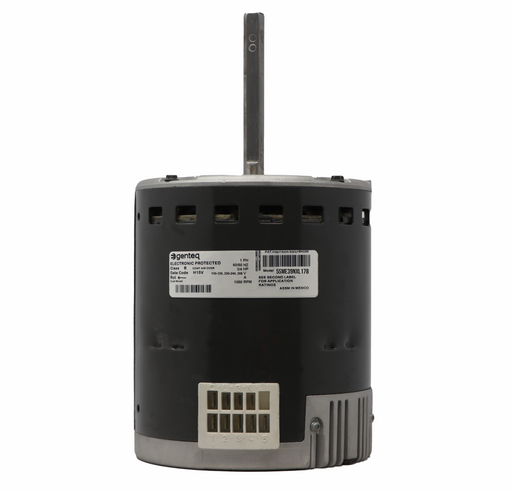
5SME39NXL178 GE Genteq Blower Motor ECM X13 3/4 HP
- Model: X13
- 0.75 HP
- 1050 RPM
Remanufactured Motor by United HVAC Motors 2 Year Replacement Warranty (Terms Apply) Plug n Play - 100% Programmed Match your Motor Model N...
View full detailsTo confirm product availability please call (813)440-8108. Some items might be in stock but not yet prepared to be shipped.

 Sold out
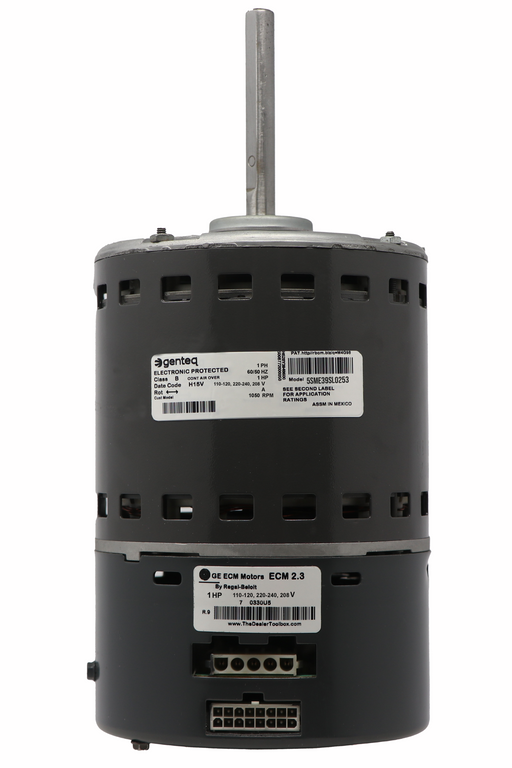
5SME39SL0253 GE Genteq Blower Motor ECM 2.3 1 HP
Sold out
5SME39SL0253 GE Genteq Blower Motor ECM 2.3 1 HP
5SME39SL0253 GE Genteq Blower Motor ECM 2.3 1 HP
- Model: 2.3
- 1.0 HP
- 1050 RPM
Remanufactured Motor by United HVAC Motors 2 Year Replacement Warranty (Terms Apply) Plug n Play - 100% Programmed Match your Motor Model N...
View full detailsThe Cost Picture (2026)
| Option | Part Cost | Efficiency | Verdict |
|---|---|---|---|
| PSC | $150 to $450 | 60 to 70% | Fine for older systems and tight budgets |
| Constant-torque ECM (X13) | $400 to $800 | ~80% | Best efficiency per dollar for most homes |
| Variable-speed ECM | $600 to $1,200+ | Up to ~90% | Worth it with good ducts, high runtime, or humidity |
Part cost ranges reflect typical U.S. pricing as of mid-2026. Installed totals in our blower motor replacement cost guide.
Can You Upgrade From a PSC?
Not as a straight swap. Moving from PSC to variable-speed ECM requires compatible mounting, correct airflow programming for your system, and in many cases changes to the control board. Some systems simply cannot accept it.
Have a technician confirm feasibility before you budget for the upgrade. Our guide on upgrading your HVAC blower motor covers when the economics work and when they do not, and the full taxonomy is in types of HVAC blower motors.
If Yours Has Already Failed
An OEM variable-speed ECM means full list price and, in peak season, a three-to-four-week backorder. A remanufactured Genteq ECM or X13 motor is rebuilt to OEM specification, ships already programmed for your model so it installs plug-and-play, and carries a 2-year warranty. Same labor, same performance, materially lower cost, no wait.
And before you install anything: measure static pressure. If high static killed the first one, it will kill the replacement too.
FAQs
Are variable-speed blower motors worth the extra cost?
Only when the ductwork is properly sized and sealed. The motor's core advantage is maintaining constant airflow, and on a restricted duct system that advantage is consumed fighting resistance, eliminating the efficiency benefit. With sound ducts, high runtime, or a humid climate, it is worth it.
How much energy does a variable-speed blower motor actually save?
It reaches up to roughly 90% efficiency against 60 to 70% for a PSC. The real-world saving scales with runtime, so systems that run the fan continuously see the largest benefit and the fastest payback.
What is the downside of a variable-speed blower motor?
Higher upfront cost, mandatory model-specific programming, and vulnerability to high static pressure, which overheats and destroys the control module. It is the least forgiving motor type in a poorly ducted home.
Is an X13 motor a better value than variable-speed?
For most homes, yes. A constant-torque X13 ECM delivers around 80% efficiency at considerably lower cost. Variable-speed pulls ahead specifically on humidity control and continuous-fan operation.
Can I put a variable-speed motor in my existing furnace?
Only if the system supports it. It requires compatible mounting, airflow programming, and often a control board change. A technician must confirm compatibility first.
Why did my variable-speed motor fail so quickly?
Most often, excessive static pressure. Clogged filters, undersized returns, or restricted ducts force the motor to draw more current and run hotter, degrading the control module. Fix the airflow restriction or the replacement will fail as well.
Next Steps
Measure static pressure before you decide. Then compare an OEM quote against a programmed remanufactured unit with a 2-year warranty. USA-based technical support in English and Spanish.
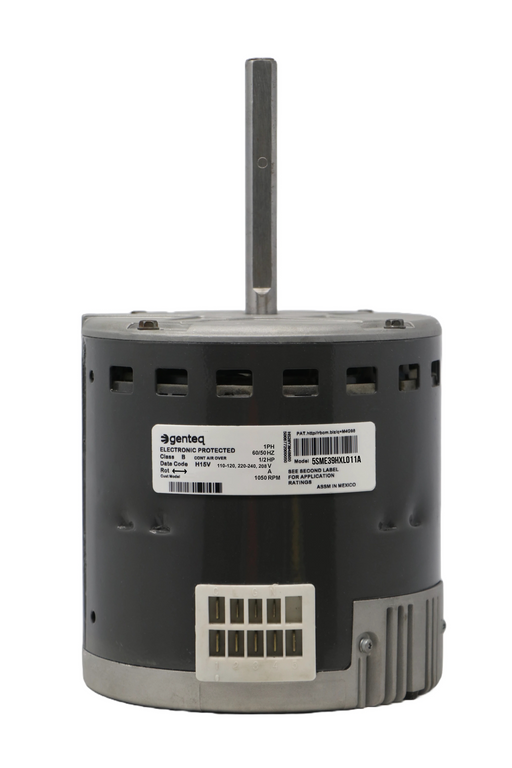
5SME39HXL011A GE Genteq Blower Motor ECM X13 1/2 HP
- Model: X13
- 0.5 HP
- 1050 RPM
Remanufactured Motor by United HVAC Motors 2 Year Replacement Warranty (Terms Apply) Plug n Play - 100% Programmed Match your Motor Model N...
View full details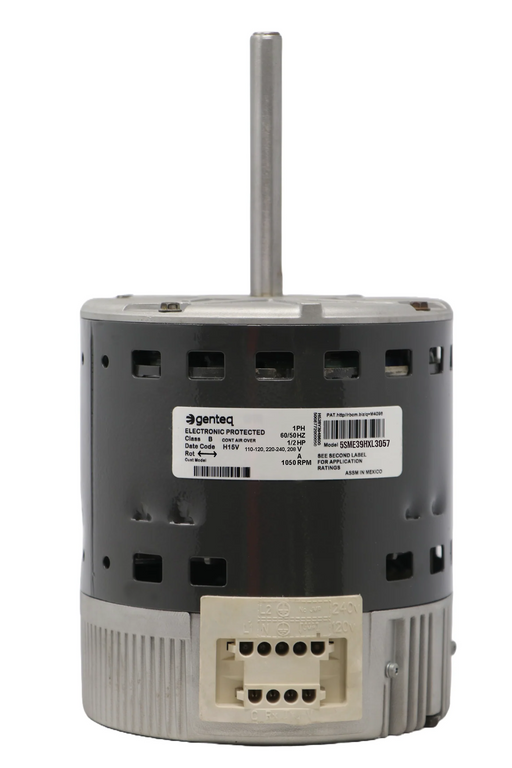
5SME39HXL3057 GE Genteq Blower Motor ECM 3.0 1/2 HP
- Model: 3.0
- 0.5 HP
- 1050 RPM
Remanufactured Motor by United HVAC Motors 2 Year Replacement Warranty (Terms Apply) Plug n Play - 100% Programmed Match your Motor Model N...
View full details