

Updated July 2026 · Reviewed by the United HVAC Motors technical team
ECM blower motors at a glance
- What it is: a brushless DC motor with an onboard electronic control module that replaces mechanical commutation with electronic switching.
- Efficiency: up to roughly 90%, against 60 to 70% for a traditional PSC motor.
- Two families: constant-torque (X13) and variable-speed. Both are ECMs.
- Replacement cost: $400 to $1,200+ for the part in 2026, depending on family and OEM versus remanufactured.
- What actually fails: the control module, far more often than the motor windings. High static pressure is the usual culprit.
ECM blower motors are now standard equipment across most mid-range and premium HVAC systems, and they behave nothing like the motors they replaced. They are more efficient, quieter, and considerably more expensive to replace. This guide covers how they work, what they cost, why they fail, and what to do about it.
What an ECM Blower Motor Actually Is
ECM stands for electronically commutated motor. In a conventional AC motor, commutation (switching the direction of current through the windings) is handled mechanically. In an ECM, an onboard microprocessor does it electronically, dozens of times per revolution, with no brushes to wear out.
That single design change produces the entire list of benefits:
- Efficiency: up to about 90%, against 60 to 70% for a PSC motor. On a system running the fan continuously, that difference shows up on the utility bill.
- Speed control: the motor can run at whatever speed the system needs, rather than switching between fixed taps.
- Soft ramping: it starts and stops gradually rather than slamming to full speed, which is most of why ECM systems are quieter.
- No brushes: one entire category of mechanical wear simply does not exist.
The Two Kinds of ECM
This trips up nearly everyone, including plenty of contractors.
Constant-torque ECM (X13). Brushless DC, electronically commutated, but running on preset speed taps selected at installation. It holds torque constant, which means airflow falls off as the filter loads and static pressure climbs. Efficient, quiet, and considerably cheaper than the alternative.
Variable-speed ECM. Same underlying technology, but modulating continuously and holding airflow constant rather than torque. It ramps up to compensate as static pressure rises. This is what makes true low-speed dehumidification possible, and it is the tier that delivers the efficiency numbers on the brochure.
Both are ECMs. Neither is "the ECM." If someone tells you a system has "an ECM" without specifying which, they have not actually told you what you need to know. Our full breakdown of ECM vs. variable-speed blower motors settles the terminology properly.

Are you an HVAC company?
Save big with our B2B program: trade pricing on 30,000+ remanufactured Genteq motors, same-day processing and a 2-year warranty.
ECM vs. PSC: The Numbers
| Feature | ECM Blower Motor | PSC (Traditional) |
|---|---|---|
| Efficiency | Up to ~90% | 60 to 70% |
| Speed control | Electronic, multi-speed or continuous | Single or two-speed |
| Noise | Low, soft ramp | Higher, hard start |
| Run capacitor required | No | Yes |
| Part cost (2026) | $400 to $1,200+ | $150 to $450 |
| Programming needed | Yes (model-specific) | No |
Cost ranges reflect typical U.S. pricing as of mid-2026. Full breakdown in our blower motor replacement cost guide.
Why ECM Motors Fail (And It Is Not What You Think)
This is the part most articles leave out, and it is the part that costs people money.
An ECM rarely fails because the motor itself wore out. The windings and bearings routinely outlast the system. What fails is the control module, the electronics bolted to the end of the motor. And the reason it fails is almost always the same: excessive static pressure.
When a filter is clogged, a return is undersized, or ductwork is restricted, a variable-speed ECM does exactly what it was designed to do: it works harder to maintain airflow. It draws more current. It runs hotter. And the control module, sitting in that heat, degrades. A PSC motor in the same situation simply moves less air and shrugs. An ECM cooks itself trying to solve the problem.
The practical consequence: if you replace an ECM without fixing the static pressure that killed it, you will be replacing it again. Any technician who swaps the motor without measuring static pressure has not finished the job.
Common symptoms of a failing ECM include intermittent operation, the blower stopping and restarting, unusual humming without rotation, or the system running at the wrong airflow. Our guide on troubleshooting blower motor problems walks through diagnosis, and how to test an HVAC blower motor covers confirming the failure before you spend anything.
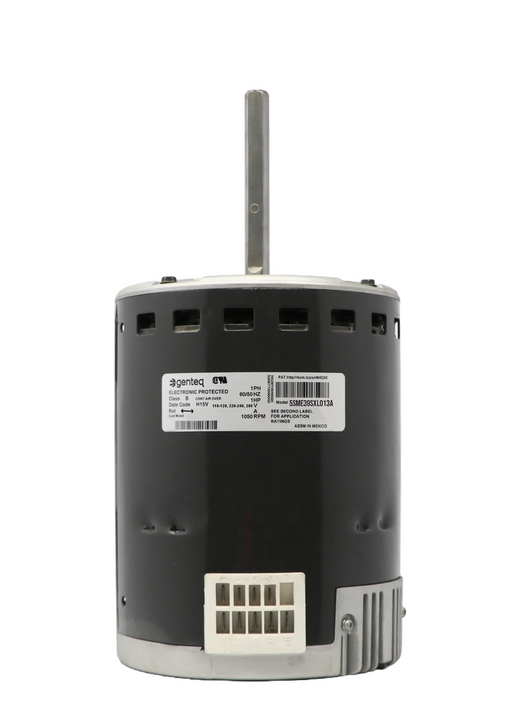
5SME39SXL013A GE Genteq Blower Motor ECM X13 1 HP
- Model: X13
- 1.0 HP
- 1050 RPM
Remanufactured Motor by United HVAC Motors 2 Year Replacement Warranty (Terms Apply) Plug n Play - 100% Programmed Match your Motor Model N...
View full details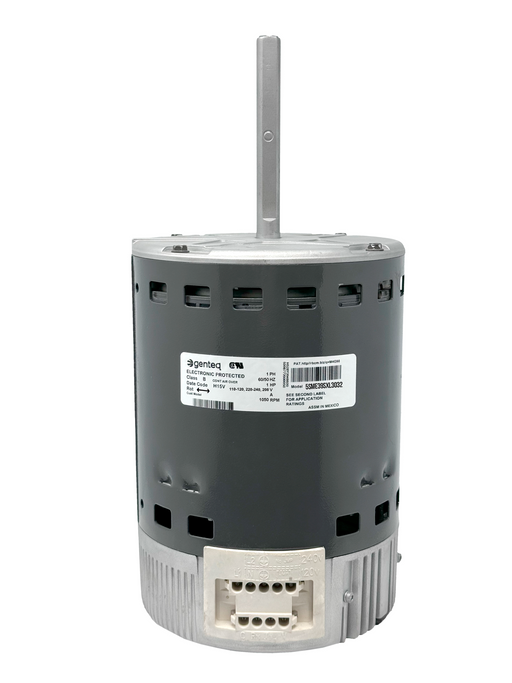
5SME39SXL3032 GE Genteq Blower Motor ECM 3.0 1 HP
- Model: 3.0
- 1.0 HP
- 1050 RPM
Remanufactured Motor by United HVAC Motors 2 Year Replacement Warranty (Terms Apply) Plug n Play - 100% Programmed Match your Motor Model N...
View full detailsReplacing an ECM: OEM or Remanufactured
Once the failure is confirmed, this is the decision that determines the size of the bill.
An OEM ECM means full manufacturer list price and whatever lead time the distributor quotes, which in peak season regularly runs three to four weeks. A quality remanufactured Genteq ECM or X13 motor is rebuilt to OEM specification, ships already programmed for your specific model so it drops in plug-and-play, and carries a 2-year warranty. Labor is identical. Performance is identical.
The one non-negotiable: the unit must be programmed for your model. A generically-flashed ECM will run at the wrong airflow profile and silently give back every efficiency gain the motor was supposed to deliver.
Where ECMs Are Used
- Residential furnaces and air handlers. Now standard on virtually all mid-tier and premium equipment.
- Heat pumps. Variable-speed ECMs are central to the low-ambient performance premium heat pumps advertise.
- Commercial air handling. Where continuous fan operation makes the efficiency delta compound quickly.
For how the ECM sits within the wider assembly, see key components of an HVAC blower explained.
FAQs
What does ECM stand for in HVAC?
Electronically commutated motor. It is a brushless DC motor whose commutation is handled by an onboard electronic control module rather than mechanical brushes.
How efficient is an ECM blower motor?
Up to roughly 90%, compared to 60 to 70% for a traditional PSC motor. The real-world gain is largest on systems that run the blower continuously.
How long does an ECM blower motor last?
The motor itself commonly outlives the system. Failures are usually in the control module, and lifespan depends heavily on static pressure. A well-ducted, well-maintained system will see far longer ECM life than a restricted one.
Why do ECM control modules fail?
Excessive static pressure. Clogged filters, undersized returns, and restricted ductwork force the motor to draw more current and run hotter, which degrades the electronics. Fix the static pressure or the replacement will fail too.
Can an ECM be repaired instead of replaced?
The control module can sometimes be replaced separately from the motor, but in practice the cost and labor rarely beat a programmed remanufactured complete unit.
Do ECM motors need a capacitor?
No. Run capacitors are a PSC requirement. If your motor has a run capacitor, it is not an ECM.
Next Steps
If your ECM has failed, confirm the diagnosis, measure static pressure, and then compare the OEM quote against a programmed remanufactured unit with a 2-year warranty. USA-based technical support in English and Spanish.
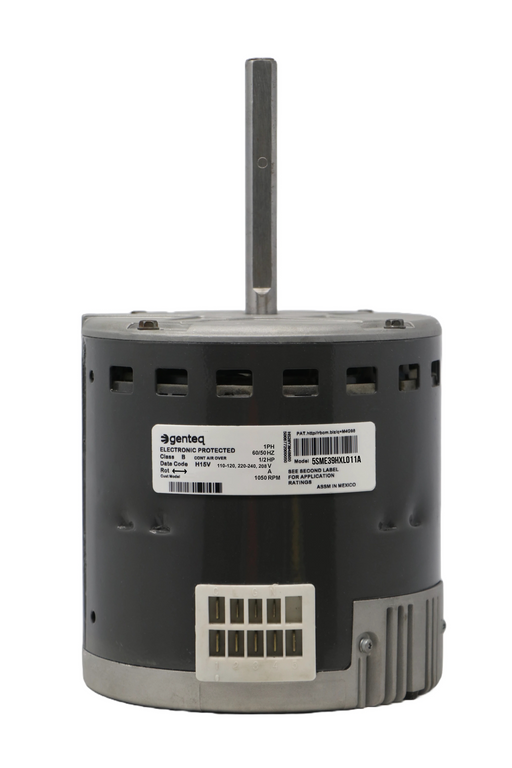
5SME39HXL011A GE Genteq Blower Motor ECM X13 1/2 HP
- Model: X13
- 0.5 HP
- 1050 RPM
Remanufactured Motor by United HVAC Motors 2 Year Replacement Warranty (Terms Apply) Plug n Play - 100% Programmed Match your Motor Model N...
View full detailsTo confirm product availability please call (813)440-8108. Some items might be in stock but not yet prepared to be shipped.

 Sold out
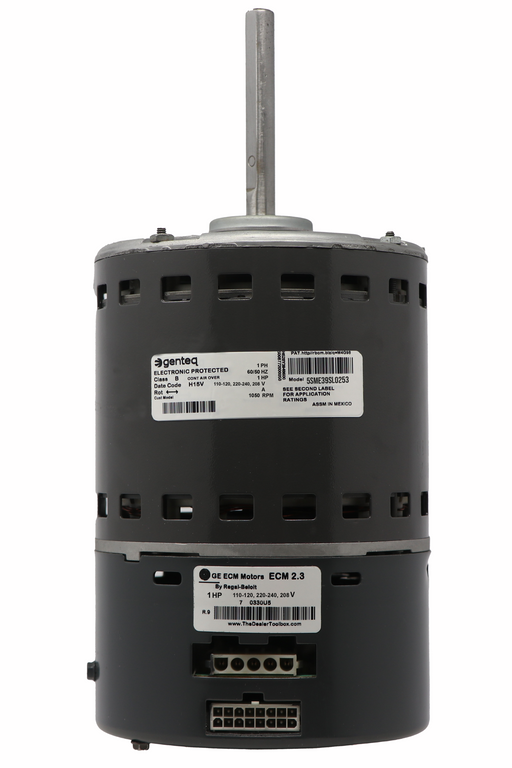
5SME39SL0253 GE Genteq Blower Motor ECM 2.3 1 HP
Sold out
5SME39SL0253 GE Genteq Blower Motor ECM 2.3 1 HP
5SME39SL0253 GE Genteq Blower Motor ECM 2.3 1 HP
- Model: 2.3
- 1.0 HP
- 1050 RPM
Remanufactured Motor by United HVAC Motors 2 Year Replacement Warranty (Terms Apply) Plug n Play - 100% Programmed Match your Motor Model N...
View full details